Home > Insights > Made to Last: 25 Years of Prowess in Space
By MDA Space - April 30, 2026
Made to Last: 25 Years of Prowess in Space
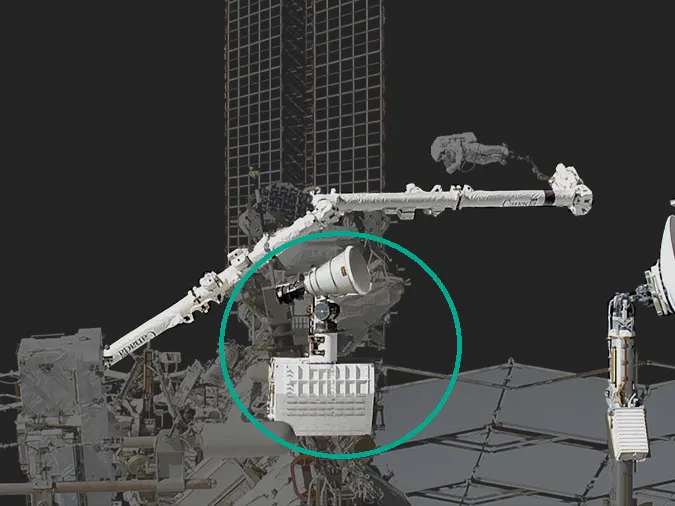
To the layman, it doesn’t look like much and its name, the Assembly and Contingency Radio Frequency Group (ACRFG), says little. But this piece of hardware is a phenomenal workhorse. Designed to have a 10-year lifespan, it spent a quarter of a century affixed to the exterior of the International Space Station relaying voice communications, command telemetry and tracking data across the 400 kilometres that separate the ISS from Earth. The unit, along with a twin and two backups that work in tandem, was entirely designed and built by MDA Space, and it’s now being refurbished by some of the same team members who were behind the project all those years ago.
A Critical System
For ISS Mission Control, the ACRFG is everything. This directional antenna with a narrow, focused beam sends signals to the Tracking and Data Relay Satellite System (TDRSS) constellation in geosynchronous orbit, which are then collected on Earth by NASA’s White Sands Ground Terminal in Las Cruces, Mexico. The data enables flight controllers to monitor the station’s systems and environment, communicate with the astronauts, and control operations, including those of the Canadarm2 robotic arm, MDA Space’s best-known technological achievement.
In designing and building the S-band communication unit, there was no room for error. It simply had to work. And it had to be protected from the harsh elements: radiation, extreme temperature variations and impacts from debris hitting at high speeds. The ACRFG was therefore encased in a pressurized shell, making it impossible to open for repair in space. Rare are the MDA Space systems that have been pressurized over the years, so the procedure was a feat in itself.
Incredibly, the unit succeeded in its mission for far longer than was intended. Understandably, it now requires some maintenance. Astronauts Sunita Williams and Butch Wilmore retrieved the unit during a spacewalk in January 2025, and it was returned several months later to MDA Space in Montréal.
A Momentous Unboxing
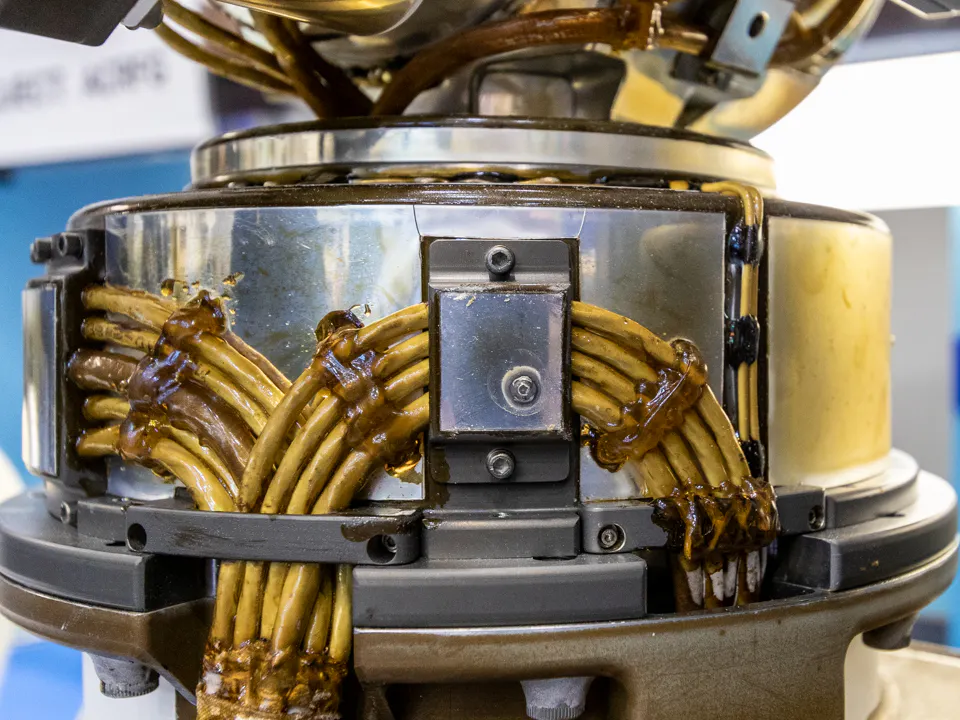
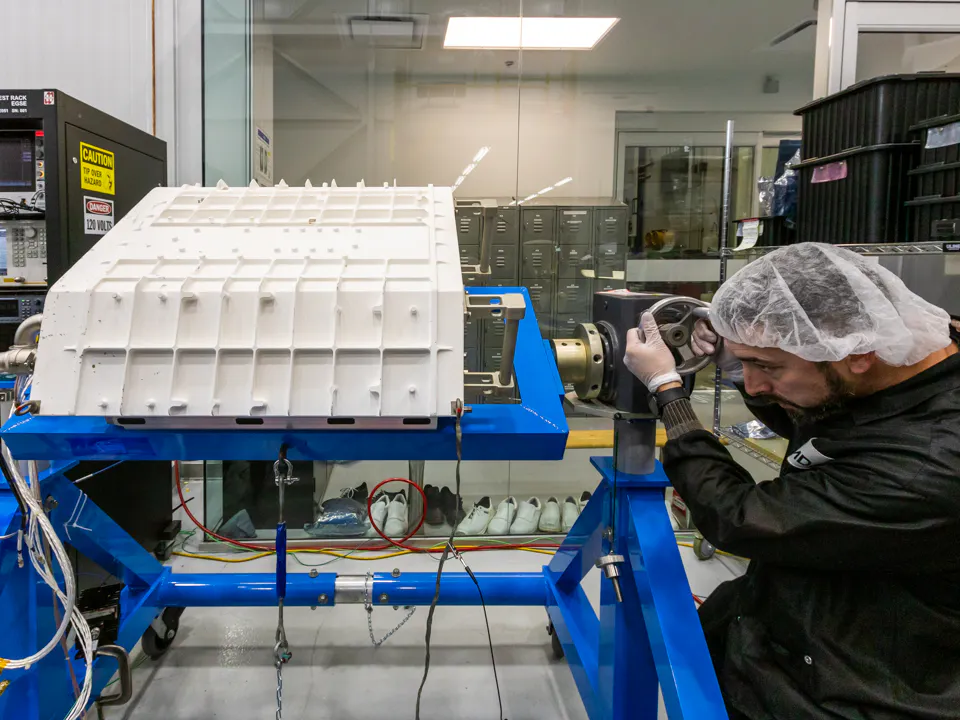
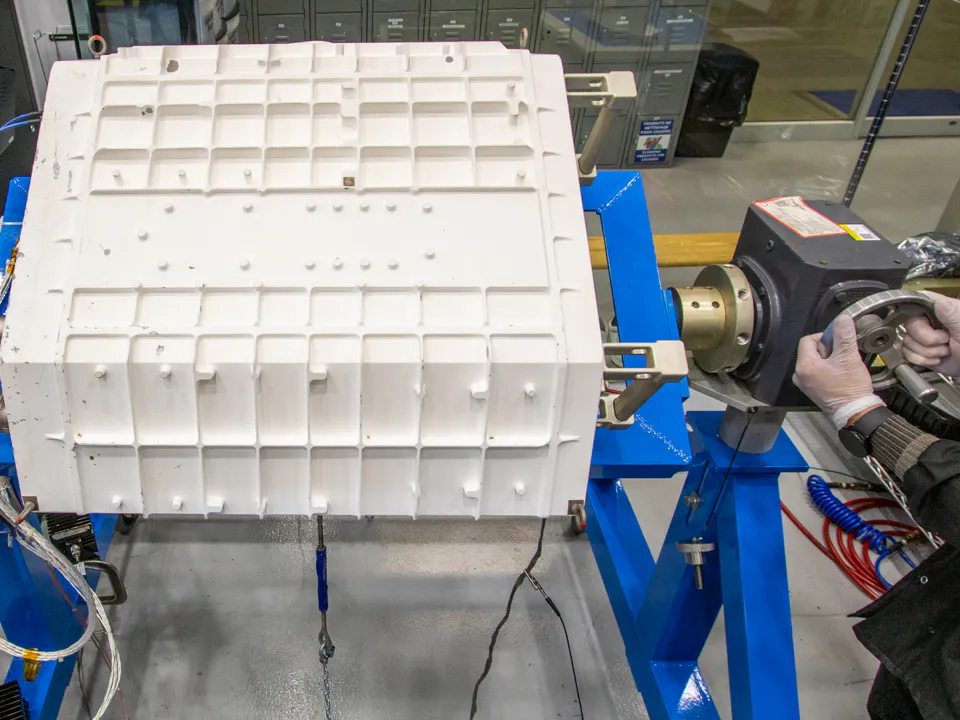
“With most customers, you never see hardware again,” says unit lead Bill Stewart. “You get regular updates when it’s misbehaving, but this is unheard of for anything we have in the building. It’s not trivial.” What’s not trivial either is that the unit is still pressurized. The unique thermal protective paint was visibly battered by micrometeorites. High-performance epoxy adhesives like Hysol yellowed with radiation. Yet, the ACRFG is in remarkable condition.
The team powered up the system for the first time in November and has begun analyzing its functioning to diagnose failures. Work inside is delicate and it will take as much as a year and a half to repair any issues, reassemble and repressurize the unit with gaseous helium and nitrogen, give it a fresh coat of paint, and to pass the acceptance test campaign. Once it’s good as new and cleared for duty, the ACRFG will resume its mission on the ISS, alongside the four remaining units. Now that is sustained success under pressure!